

Table of Contents
- Why Bariatric Vitamins Are Non-Negotiable After Weight Loss Surgery
- Bariatric Vitamin Deficiency Symptoms You Shouldn't Ignore
- ASMBS Vitamin Guidelines: What the Standards Actually Require
- The Core Bariatric Vitamins Your Body Needs Daily
- Bariatric Advantage vs Celebrate Vitamins Comparison: How Generic Brands Fall Short
- Managing Side Effects, Costs, and Long-Term Supplement Adherence
- How to Choose the Right Bariatric Vitamin Protocol
- Conclusion
Last Updated: August 21, 2026
Why Bariatric Vitamins Are Non-Negotiable After Weight Loss Surgery
Bariatric vitamins are specialized, high-dose nutritional supplements formulated to compensate for the dramatic reduction in nutrient absorption that follows weight loss surgery. Most patients don't realize how severe this gap can become until deficiencies show up in blood work, months or even years after their procedure.
At WLSVitamins, we've built every formula around one uncomfortable truth: the standard multivitamin sitting on a pharmacy shelf was never designed for a post-bariatric body. The anatomy changes. The absorption changes. The nutritional requirements change. Generic supplements don't account for any of that.
Below, we'll break down exactly what your body needs after surgery, why the formulation details matter far more than most patients are told, and how to build a protocol that actually holds up over years of lifelong supplementation.
How Malabsorption Changes Everything
Malabsorption is the reduced ability of the gastrointestinal tract to absorb nutrients from food and supplements after bariatric surgery. After procedures like gastric bypass, the digestive system is rerouted so that food bypasses a significant portion of the small intestine, the primary site of nutrient absorption.
The practical result: even if you swallow a supplement, your body may only absorb a fraction of what the label claims. Fat-soluble vitamins like D3 and K2 are particularly vulnerable. Iron and B12 absorption can fall dramatically. Calcium absorption shifts entirely, making the form of calcium you take, not just the dose, critically important.
This is why bariatric-specific formulation exists as a distinct category. It's not marketing. It's physiology.
Gastric Bypass vs. Sleeve Gastrectomy: Different Needs
Gastric bypass and sleeve gastrectomy create different anatomical changes with different micronutrient deficiency risks.
Gastric bypass patients face higher risk of iron deficiency anemia, B12 deficiency, and calcium malabsorption because the duodenum and upper jejunum, where these nutrients are primarily absorbed, are bypassed entirely. Sleeve gastrectomy patients retain normal intestinal routing but lose stomach volume, which reduces intrinsic factor production and limits the acid environment needed for B12 and iron absorption.
Both procedures require lifelong supplementation. Bypass patients typically need higher doses of iron and calcium citrate specifically, since calcium carbonate requires stomach acid to dissolve, and that acid environment is compromised post-bypass.
Bariatric Vitamin Deficiency Symptoms You Shouldn't Ignore
Bariatric vitamin deficiency symptoms often develop gradually, which makes them easy to attribute to other causes. Fatigue gets blamed on poor sleep. Numbness in the hands gets dismissed as posture. Hair thinning gets written off as stress.

The most common warning signs include persistent fatigue and brain fog (often the first signs of B12 or iron deficiency), hair loss beyond the typical 3-6 month post-op shedding phase (signals zinc, biotin, or protein deficiency), numbness or tingling in hands and feet (a classic indicator of B12 or thiamine deficiency), bone pain or stress fractures (suggest vitamin D3 and calcium deficiency), heart palpitations or shortness of breath (can indicate iron-deficiency anemia), and depression or mood instability (linked to B-vitamin deficiencies).
By the time symptoms appear, serum levels are often already significantly depleted. Preventative care through consistent supplementation is far more effective than correcting a deficiency after it's established.
ASMBS Vitamin Guidelines: What the Standards Actually Require
The American Society for Metabolic and Bariatric Surgery nutritional guidelines represent the clinical standard for post-operative supplementation in the United States.
The ASMBS guidelines specify that all bariatric surgery patients should take a complete multivitamin complex with minerals, including iron, calcium citrate (not carbonate), vitamin D3, and B12 as methylcobalamin or sublingual forms for maximum bioavailability. Standard over-the-counter multivitamins typically do not meet post-bariatric daily requirements for key nutrients.

Thiamine (vitamin B1) is specifically called out for gastric bypass patients due to the risk of Wernicke's encephalopathy, a serious neurological condition tied to severe thiamine deficiency. Supplement adherence is consistently identified in clinical literature as the single biggest predictor of long-term nutritional outcomes after bariatric surgery.
The Core Bariatric Vitamins Your Body Needs Daily
Building a complete bariatric protocol means addressing each major deficiency category with the right form of each nutrient, at the right dose, in a formulation your post-op digestive system can actually absorb.
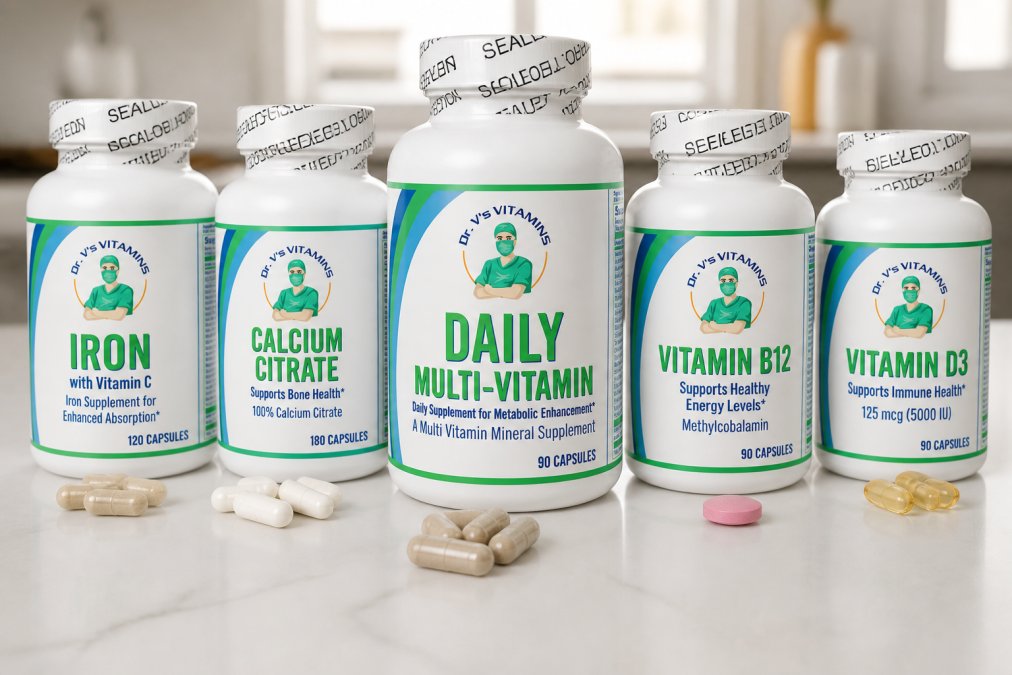
Dr. V's Daily Multi: High-Thiamine Multivitamin Capsule
Most bariatric multivitamins get the basics right and miss the details that actually matter. Dr. V's Daily Multi was developed by a bariatric surgeon drawing on over two decades of patient blood work, and the formula reflects what that data actually shows patients are deficient in.

The standout: Thiamine at 75 mg per serving, delivering 6,250% of the daily value. Thiamine deficiency after gastric bypass is a documented risk, and most generic multivitamins include a fraction of what post-op patients need. The formula also includes methylcobalamin (the metabolically active form of B12), vitamin D3, K2 as MK-7, and a full trace mineral complex including zinc citrate, selenium glycinate, and chromium picolinate. Three capsules daily, taken as directed by your healthcare provider.
Iron Bis-Glycinate with Vitamin C and B12
Iron deficiency is the most common nutritional complication after bariatric surgery, particularly in menstruating women. Iron Bis-Glycinate with Vitamin C & B12 uses ferrous glycinate, a chelated form of iron where the mineral is bound to a protein carrier. This bypasses the standard absorption pathway that's compromised after surgery, making it one of the few forms that bariatric patients can reliably absorb. The formula combines iron with vitamin C to further support absorption, plus riboflavin, folic acid, and B12.

Ferrous sulfate, the form found in most generic iron supplements, is harder on the gastrointestinal tract and poorly absorbed post-op.
Chewable B12 (Methylcobalamin) for Maximum Absorption
B12 absorption after bariatric surgery is compromised because the stomach produces less intrinsic factor, the protein required to absorb B12 through the standard digestive pathway. The Chewable B12 for Bariatric & GLP-1 Patients delivers 1,000 mcg of methylcobalamin per tablet, paired with folic acid, in a pleasant-tasting chewable format. No water needed. This is also appropriate for GLP-1 medication users, where reduced food intake can limit dietary B12 intake significantly.
Vitamin D3 5,000 IU for Bone Density and Metabolic Health
Vitamin D3 deficiency after bariatric surgery isn't just about bone density, though that's serious enough. Vitamin D3 plays a role in immune function, mood regulation, calcium absorption, and metabolic health. Bariatric Vitamin D3 5,000 IU delivers 5,000 IU of cholecalciferol (D3, the most bioavailable form) per capsule. The ASMBS guidelines recommend higher D3 supplementation for bariatric patients than the general population.
Vitamin D3 should always be taken with calcium citrate for optimal bone density protection, since D3 is required for calcium absorption.
B Complex with Thiamine for GLP-1 and Post-Op Support
The B Complex with Thiamine is designed to support proper nerve function for both post-bariatric patients and GLP-1 medication users experiencing rapid weight loss. The formula delivers the full B-vitamin spectrum at therapeutic doses: 75 mg each of thiamine, riboflavin, niacinamide, B6, pantothenic acid, choline, and inositol, plus 400 mcg of folic acid and 75 mcg of B12.
This is a strong addition for anyone experiencing fatigue, brain fog, or neurological symptoms that haven't resolved with a standard multivitamin alone.
Generic Brands vs. Bariatric-Specific Formulas: How Other Providers Fall Short
Many patients come to WLSVitamins after years on other providers' products, asking the same question: "What's actually different?" The answer lives in the formulation details.
Generic bariatric brands typically use cyanocobalamin instead of methylcobalamin for B12, calcium carbonate instead of calcium citrate, and standard ferrous sulfate instead of chelated iron forms like ferrous glycinate. Each of these substitutions reduces bioavailability for post-bariatric patients.
| Nutrient | Generic Bariatric Brands | WLSVitamins Formulas |
|---|---|---|
| Vitamin B12 form | Cyanocobalamin (requires methylation) | Methylcobalamin (metabolically active) |
| Calcium form | Calcium carbonate (requires stomach acid) | Calcium citrate (acid-independent) |
| Iron form | Ferrous sulfate (GI irritant, poor absorption) | Ferrous glycinate (chelated, protein-bound) |
| Thiamine dose | Low or absent | 75 mg (6,250% DV) |
| Formula basis | Standard supplement formulation | 20+ years of bariatric patient blood work |
| GLP-1 compatibility | Not specifically addressed | Explicitly formulated for GLP-1 users |
Managing Side Effects, Costs, and Long-Term Supplement Adherence
Buying the right vitamins is step one. Actually taking them consistently for the rest of your life is the harder problem.
Nausea, Taste Fatigue, and Gastrointestinal Tolerance
Nausea is the most common reason bariatric patients abandon their supplement protocol. The usual culprit is iron. Ferrous sulfate, the form in most generic supplements, is notoriously hard on the stomach. Switching to iron bis-glycinate, the chelated form used in WLSVitamins Iron Glycinate, significantly reduces gastrointestinal irritation for most patients.
Taste fatigue is a real and underappreciated problem with chewable supplements. The WLSVitamins protocol uses capsules for the multivitamin and B complex, limiting chewable formats to the B12 tablet where sublingual absorption is genuinely necessary.
Practical strategies for managing side effects: take iron supplements with food to reduce stomach upset, but not with calcium supplements, since calcium inhibits iron absorption. Space calcium and iron doses at least two hours apart. If nausea persists with capsules, try taking supplements mid-meal rather than before or after.
According to guidance from the National Institutes of Health Office of Dietary Supplements, iron absorption is significantly influenced by what you take it with, making timing and pairing as important as the supplement itself.
Third-Party Testing and Manufacturing Standards
Bariatric supplementation is a lifelong commitment. The cost of treating established iron-deficiency anemia, vitamin D deficiency, or B12-related neuropathy in medical visits, infusions, and lost productivity far exceeds the cost of consistent preventative supplementation.
On third-party testing: patients should look for supplements that disclose their manufacturing standards. The NSF International dietary supplement certification program and USP verification are two of the most recognized certification labels in the supplement industry. When evaluating any bariatric supplement, asking about manufacturing standards and third-party testing is a reasonable and important step.
How to Choose the Right Bariatric Vitamin Protocol
Choosing the right bariatric vitamin protocol comes down to four factors: your surgery type, your current blood work, your gastrointestinal tolerance, and your ability to maintain consistent daily habits.
Use this framework:
| Factor | Gastric Bypass | Sleeve Gastrectomy | GLP-1 User (No Surgery) |
|---|---|---|---|
| Multivitamin | High-thiamine, methylcobalamin | Standard bariatric multi | B-complex focus |
| Iron | Ferrous glycinate, daily | Monitor serum levels | As directed by labs |
| B12 | Chewable methylcobalamin | Chewable or sublingual | Chewable recommended |
| Vitamin D3 | 5,000 IU minimum | 3,000-5,000 IU | Based on serum levels |
| Calcium | Citrate form only | Citrate preferred | Citrate or carbonate |
The single most important rule: match your supplementation to your blood work, not to a generic protocol. Annual labs should guide dose adjustments.
- Confirm your surgery type and discuss specific deficiency risks with your surgeon
- Get baseline labs before starting any new supplement protocol
- Choose calcium citrate over calcium carbonate if you've had gastric bypass
- Separate iron and calcium doses by at least two hours
- Use methylcobalamin B12 in chewable or sublingual form, not cyanocobalamin
- Schedule lab reviews every six months for the first two years, then annually
Supplement adherence drops significantly after the first year post-op, when patients feel better and the urgency fades. Building a simple daily routine, same time, same location, same order, is more effective than any specific product choice.
For GLP-1 medication users who haven't had surgery: the nutrient absorption challenges are different but real. Reduced caloric intake limits dietary micronutrient intake, and the B-vitamin and D3 gaps are particularly common. The WLSVitamins B Complex and D3 formulas are appropriate for this population, and the chewable B12 is especially relevant given how common B12 insufficiency becomes with prolonged GLP-1 use.
According to American Diabetes Association standards of medical care, patients on certain medications that affect nutrient absorption should have their nutritional status monitored regularly, reinforcing the importance of both supplementation and lab follow-up for GLP-1 users.
Maintaining adequate nutrition after bariatric surgery or during GLP-1 therapy is genuinely difficult without the right formulas, and most patients don't discover the gaps in their protocol until blood work confirms a deficiency. WLSVitamins was built specifically to close those gaps, with every formula developed from two decades of actual patient blood work rather than standard supplement industry templates. Add Dr. V's Daily Multi, Iron Bis-Glycinate, Chewable B12, Vitamin D3 5,000 IU, and the B Complex to your protocol and give your body what it actually needs to recover, rebuild, and sustain your results long-term.
Frequently Asked Questions
Why do bariatric patients need specialized vitamins instead of generic ones?
After weight loss surgery, the stomach is significantly smaller and the digestive tract is altered, which reduces the body's ability to absorb nutrients from food and standard supplements. Generic multivitamins are formulated for people with normal digestion and typically contain lower doses of key nutrients like thiamine, B12, iron, and vitamin D3. Bariatric-specific formulations use forms of nutrients with higher bioavailability, such as methylcobalamin instead of cyanocobalamin, and doses calibrated to post-operative absorption levels.
What are the best vitamins to take after bariatric surgery?
ASMBS guidelines recommend that all bariatric surgery patients take a high-potency multivitamin, calcium citrate (split into doses throughout the day), vitamin D3, vitamin B12, and iron, particularly for menstruating women and gastric bypass patients. The specific forms and doses matter: calcium citrate absorbs better than carbonate after surgery, and methylcobalamin B12 is more bioavailable than cyanocobalamin. A surgeon-formulated protocol like WLSVitamins covers these bases with bariatric-specific dosing.
What bariatric vitamins are recommended for gastric sleeve surgery?
Gastric sleeve patients typically need a comprehensive multivitamin, vitamin D3, B12, and iron, though their malabsorption risk is lower than gastric bypass patients since the intestinal route remains intact. However, reduced stomach size still limits nutrient intake from food alone. Sleeve patients often do well with high-potency capsule multivitamins like Dr. V's Daily Multi, which delivers elevated thiamine, B12 as methylcobalamin, and a full trace mineral profile without relying on a large stomach capacity to absorb them.
Are there over-the-counter bariatric vitamins available?
Yes, bariatric vitamins are available without a prescription and can be purchased directly online. The critical difference is formulation quality, not all over-the-counter options are designed with post-operative absorption in mind. Look for products that specify bariatric-specific dosing, use bioavailable nutrient forms (like methylcobalamin for B12 and ferrous glycinate for iron), and are developed by clinicians with direct bariatric patient experience. WLSVitamins products are available to order directly and ship without a prescription.
Can GLP-1 medication users take bariatric vitamins?
GLP-1 medications like semaglutide significantly reduce appetite and food intake, which creates nutrient gaps similar to those seen after bariatric surgery, particularly for B vitamins, iron, and vitamin D. Bariatric vitamins formulated for post-op patients are appropriate for GLP-1 users because both groups face reduced dietary intake and overlapping micronutrient deficiency risks. WLSVitamins products, including the B Complex and Chewable B12, are specifically noted as suitable for GLP-1 users managing weight loss or chronic conditions.
This article was written using GrandRanker