
Last Updated: October 22, 2026
Quick Summary
Increase protein intake after gastric bypass by sipping protein shakes and fortified milk slowly in the early weeks, then adding soft proteins like eggs, yogurt, and cottage cheese. Eat protein first at every meal and use protein-first snacks to close the gap toward your daily target.
- Most bariatric programs aim for 60 to 100 grams of protein per day, set by your surgeon or dietitian.
- Sip protein drinks slowly over 30 minutes and stop at the first sign of fullness.
- Eat protein before vegetables or starches at every meal so your few bites count.
- Set a phone alarm for snacks, because hunger cues are often quiet or missing after surgery.
- Check the serving size on shake labels, since one bottle may hold two or three servings.
Table of Contents
- Why Protein Intake Matters After Gastric Bypass
- Setting Realistic Bariatric Protein Goals
- A Staged Plan to Build Protein Intake as Tolerated
- High-Protein Foods After Gastric Bypass
- Protein Shakes After Gastric Bypass: How to Use Them Well
- Avoiding Protein Deficiency After Gastric Bypass
- Troubleshooting Nausea, Early Fullness, and Food Intolerance
- Tracking Protein and Reading Labels
- Frequently Asked Questions
Why Protein Intake Matters After Gastric Bypass
Protein intake after gastric bypass is the most important dietary habit you will rebuild in the first year. Your stomach holds only a few ounces at a time, so every bite has to work harder. At WLSVitamins, nearly every patient asks the same question: how do I get enough protein when I can barely finish half a cup of food?
The answer: slowly, in stages, with a plan.
How Surgery Changes the Way You Absorb Protein
Gastric bypass reroutes part of your digestive tract, so food moves through faster and mixes with less digestive juice. Your body has less time and surface area to pull out nutrients, and protein suffers most because it takes more breakdown work than fat or carbs.
You face a double problem: a smaller stomach that limits volume and a shorter path that limits absorption. That is why many patients eat protein first at every meal, before vegetables or anything else.
Setting Realistic Bariatric Protein Goals
Bariatric protein goals are set by your surgeon or dietitian, not a general chart online. Most programs aim for 60 to 100 grams per day, depending on your body, procedure, and how far out from surgery you are. A common clinical starting point is about 1.5 grams per kilogram of ideal body weight, adjusted as tolerated. Consistent tracking of these specific targets helps patients refine their meal planning and effectively hit protein goals through manageable daily habits.
Why Your Target Is Individualized
Your target shifts over time. In the first weeks, you may struggle to reach half your goal; by month six, hitting the full target should feel routine.
Your care team adjusts your number based on:
- Your lab work, especially albumin and total protein
- How well you tolerate solid food
- Your rate of weight loss
Ask for your specific number in writing. "Eat more protein" is not a target. "Aim for 80 grams a day, protein first at every meal" is.
A Staged Plan to Build Protein Intake as Tolerated
Building protein intake is a staircase, not a switch. Climb one step at a time and do not move up until the current step feels comfortable. Below is a meal-by-meal progression many bariatric programs use. Always confirm your targets and timeline with your surgeon or dietitian.
| Stage | Timing | Focus | Daily Protein Aim | Sample Day |
|---|---|---|---|---|
| 1 | Weeks 1-2 | Clear liquids, then full liquids with protein | Sip protein drinks slowly; aim for 40-60 g if tolerated | Breakfast: 4 oz protein shake sipped over 30 min. Snack: 4 oz fortified milk. Lunch: 4 oz strained cream soup with unflavored protein powder. Snack: 4 oz protein shake. Dinner: 4 oz broth with protein powder. Evening: 4 oz sugar-free pudding made with protein powder. |
| 2 | Weeks 3-4 | Soft proteins: eggs, yogurt, cottage cheese | Add one soft protein per meal; aim for 60-70 g | Breakfast: 1 scrambled egg + 2 tbsp cottage cheese. Snack: 4 oz Greek yogurt. Lunch: 2 tbsp soft fish + 1 tbsp mashed avocado. Snack: 4 oz protein shake. Dinner: 2 tbsp cottage cheese + 1 tbsp soft cooked lentils. |
| 3 | Month 2-3 | Ground and tender proteins | Protein first at every meal; aim for 70-80 g | Breakfast: 1/4 cup scrambled eggs + 1 tbsp cheese. Snack: 1/2 cup Greek yogurt. Lunch: 1/4 cup ground turkey with gravy. Snack: 1 oz deli turkey + 1 cheese stick. Dinner: 1/4 cup soft salmon. |
| 4 | Month 3+ | Regular textures, protein snacks added | Build toward your full target (often 80-100 g) | Breakfast: 1/2 cup cottage cheese + 1/4 cup berries. Snack: 1 hard-boiled egg. Lunch: 2 oz grilled chicken + 1 tbsp hummus. Snack: 1/2 cup edamame. Dinner: 2 oz baked fish + 1 tbsp mashed sweet potato. |
Step 1: Start With Liquids and Soft Proteins
Your first job is sipping, not chewing. Protein shakes and fortified milk go down easiest in the early weeks.
Soft proteins come next: scrambled eggs, plain Greek yogurt, cottage cheese, and soft fish all work well. Keep portions to two or three tablespoons at first, and add moisture with gravy, soft butter, or broth. Avoid dry, crumbly textures that clump and cause discomfort.
Step 2: Add Protein to Every Small Meal
Once soft foods sit well, make protein the first thing you eat at each meal, before vegetables or starches. If you only manage a few bites, those bites should be protein.
A practical rule: set a timer for 20-30 minutes per meal and stop when you feel pressure, not when the plate is empty. Three to four ounces of protein food per meal is a realistic starting point, increasing as tolerance improves.
Step 3: Build Protein-First Snacks Into Your Day
Snacks are not cheating. They close the gap between what meals deliver and what your target requires. Good options include:
- A few slices of deli turkey
- A small container of cottage cheese
- A hard-boiled egg
Step 4: Adjust for Tolerance and Texture
If a food does not sit well, do not force it. Try a different texture or temperature: if chicken feels too dry, try dark meat with sauce or swap in soft fish or eggs. If dairy causes gas or bloating, choose lactose-free milk, hard cheeses, or plant-based protein. Keep a simple log of what works and bring it to your dietitian visits.
High-Protein Foods After Gastric Bypass
High-protein foods after gastric bypass should be soft, moist, and easy to chew.
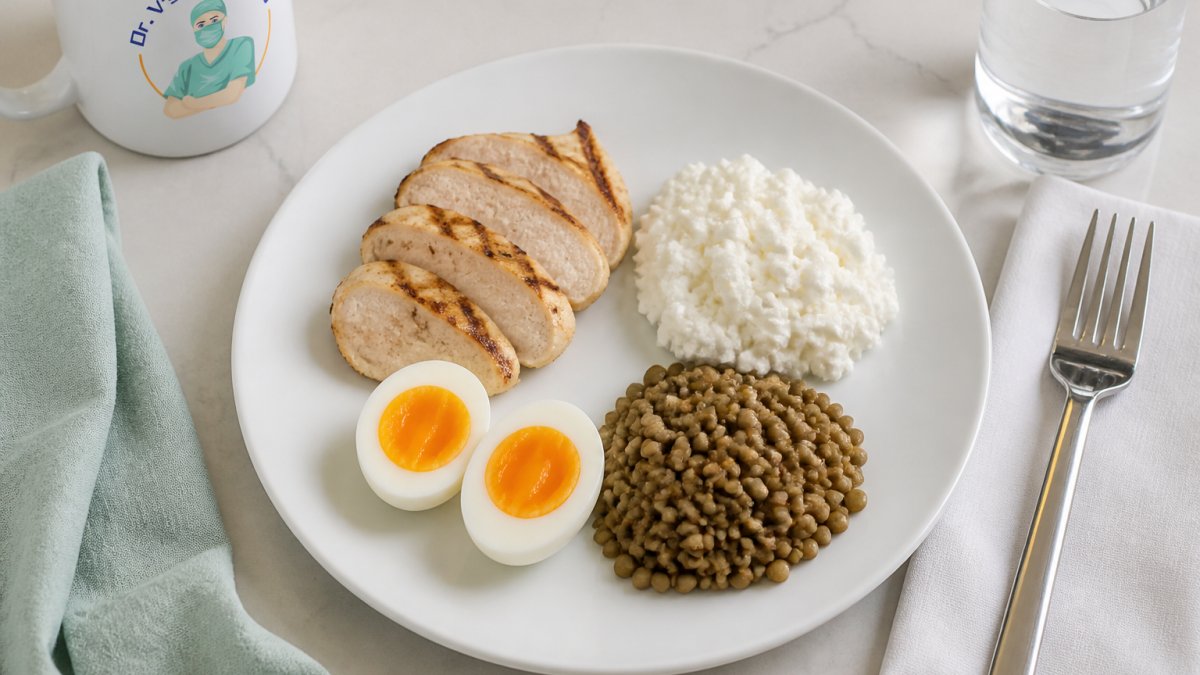
Plant-based eaters can lean on lentils, soft tofu, and soy alternatives. Add dry milk powder to soups, mashed vegetables, and oatmeal to boost protein without adding volume.
Protein Shakes After Gastric Bypass: How to Use Them Well
Protein shakes after gastric bypass are a tool, not a forever meal replacement. They bridge the gap on days when solid food does not cooperate and carry you through the early liquid stages.
A few rules keep shakes working for you:
- Choose a shake low in sugar, since dumping syndrome is a real risk
- Sip over 30 minutes, never gulp
- Use shakes to fill gaps, not to replace every meal
Most patients lean on shakes heavily for the first month or two, then taper to one a day as solid protein becomes easier. If a shake leaves you nauseated, try a different protein source or a smaller serving.
Avoiding Protein Deficiency After Gastric Bypass
Protein deficiency after gastric bypass shows up quietly at first: fatigue, brain fog, hair thinning, or slow healing. Left unchecked, it can stall weight loss and weaken muscle.
Your labs are the early warning system. Your care team will check albumin, total protein, and related markers at scheduled visits. Keep those appointments even when you feel fine.
Food alone does not always close the gap, especially in the first year. WLSVitamins was developed by a bariatric surgeon using more than two decades of patient blood work, and our formulas are built specifically for bariatric patients and GLP-1 users who need to fill nutrient gaps that generic vitamins miss.
Troubleshooting Nausea, Early Fullness, and Food Intolerance
Nausea and early fullness are common and usually have a fixable cause. The first step is slowing down: put your fork down between bites, chew each bite to a paste, and stop the moment you feel pressure. One bite that is too large or too dry can trigger hours of discomfort.
Other common culprits:
- Drinking fluids with meals, which pushes food through too fast
- Eating too fast or too much at once
- Dry or tough meats that will not break down
If You Cannot Tolerate Meat
Many patients struggle with chicken breast, steak, or pork in the first few months. Try these alternatives:
- Soft fish such as salmon, tilapia, or cod, flaked and moistened with a little broth or sauce
- Eggs, including scrambled, poached, or soft-boiled
- Cottage cheese or ricotta
If You Cannot Tolerate Dairy
Dairy is a common source of gas, bloating, or loose stools after surgery. Options include:
- Lactose-free milk and yogurt
- Hard cheeses such as cheddar or Swiss, which are lower in lactose
- Plant-based milks with added protein (soy, pea, or almond)
If You Cannot Tolerate Shakes
Some patients find shakes too sweet, too thick, or simply unappealing. Try:
- Unflavored protein powder mixed into soups, mashed vegetables, or oatmeal
- A smaller serving, sipped more slowly
- A different protein type (whey isolate, casein, soy, or pea)
If You Feel Full After a Few Bites
Early fullness is expected, but it should not keep you from meeting your protein target over time. Try:
- Smaller, more frequent meals (every 2-3 hours)
- Protein first at every meal
- Stopping at the first sign of pressure, then eating again later
When to Call Your Care Team
If nausea persists for more than a few days, or you cannot keep fluids down, call your care team. Persistent vomiting and inability to tolerate fluids need medical follow-up, not pushing through. The same applies to pain, fever, or signs of dehydration. Also seek help if you cannot meet your protein target for more than a week, notice rapid hair loss, or feel unusually weak or dizzy.
Tracking Protein and Reading Labels
Tracking protein turns a vague goal into a number you can hit. Use a food app, a paper log, or your phone's notes app. The method matters less than the habit of writing it down.
Label reading is the skill that makes tracking accurate. Follow this checklist:
- Find the protein grams per serving, not per package
- Check the serving size against what you actually eat
- Scan sugar grams, aiming low to avoid dumping
One label trap catches nearly everyone: a shake bottle may hold two or three servings. Drinking the whole bottle doubles or triples your count. Measure the serving first, then log it.
Rebuilding protein intake after gastric bypass takes patience, and some days will go better than others. At WLSVitamins, our surgeon-formulated supplements are designed to support that work, with formulas built from decades of patient blood work to help fill hidden gaps, reduce fatigue and brain fog, and support your metabolism through rapid weight loss.
Frequently Asked Questions
What happens if you don't get enough protein after gastric bypass surgery?
Low protein intake after gastric bypass can contribute to fatigue, slower wound healing, muscle loss, and hair thinning. Over time, it raises the risk of protein deficiency after gastric bypass, which can show up in blood work as low albumin or other markers. Because portions are small and absorption changes after surgery, it is easy to fall short without a plan. Aim to hit your daily protein target consistently, and tell your care team if you notice persistent tiredness, weakness, or poor healing.
How can I add protein when I can only eat small portions?
Put protein first at every meal and snack, then add vegetables or other foods if room remains. Choose dense sources like eggs, poultry, fish, cottage cheese, Greek yogurt, and beans, and use protein shakes after gastric bypass to fill gaps on low-appetite days. Add dry milk powder to soft foods, sip fluids between meals rather than with them, and eat slowly and chew thoroughly. Spreading protein across four to six small meals helps you reach bariatric protein goals without large portions.
Are protein shakes recommended after gastric bypass?
Yes, many care teams use protein shakes after gastric bypass, especially in the early weeks and on days when food intake is low. Choose shakes that are low in sugar, easy to tolerate, and provide a meaningful amount of protein per serving. Use them as a supplement to meals, not a replacement for all food, once you are eating soft and solid foods. If a shake causes nausea or fullness, try a smaller serving, sip it slowly, or ask your dietitian for an alternative.
How much protein is too much after gastric bypass?
There is no single ceiling that applies to everyone, so your clinician sets the upper limit based on your procedure, kidney health, and recovery stage. Most guidance focuses on reaching a daily target rather than avoiding a specific maximum. Very large single servings can cause fullness and nausea, so spread protein across small meals and shakes. If you have kidney concerns or other conditions, ask your care team before pushing intake higher.