

Table of Contents
- Why Energy Crashes After Weight Loss Surgery
- How to Fix Fatigue After Bariatric Surgery
- Signs of Vitamin Deficiency After Gastric Sleeve
- The Importance of Methylated Vitamins for Bariatric Patients
- Top Bariatric Vitamins for Energy: Product Comparison
- Which Bariatric Vitamin Formula Should You Choose?
- Conclusion
Why Energy Crashes After Weight Loss Surgery
Energy crashes hit hard after bariatric surgery. Your body processes massive metabolic changes, absorbs fewer nutrients from food, and runs on a fraction of your previous calorie intake. The result? Brain fog, afternoon slumps, and exhaustion that makes a full workday feel impossible.
The culprit is malabsorption. When your stomach is surgically reduced or your intestines are rerouted, your ability to absorb critical nutrients drops dramatically. B vitamins, iron, calcium, and fat-soluble vitamins slip through your system without being properly used. Without these micronutrients, your cells can't generate energy efficiently. Your metabolism stutters, and your body sends constant fatigue signals.
This is where the best bariatric vitamins for energy levels become non-negotiable. Generic multivitamins don't work because they're designed for people with intact digestive systems. Bariatric patients need formulations specifically engineered for rapid absorption and higher potency to compensate for malabsorption. At WLSVitamins, we've spent over two decades analyzing patient blood work to understand exactly which nutrients matter most for sustained energy after surgery.
The good news: the right supplement regimen works. The key is choosing formulas that address your specific deficiency pattern.
How to Fix Fatigue After Bariatric Surgery
Fatigue after bariatric surgery responds to three interventions: identifying your specific deficiency, choosing the right supplement format for your sensitive stomach, and timing your intake correctly throughout the day.
Start by understanding what's actually depleted. The most common culprits are B12, iron, and folate. B12 deficiency causes neurological fatigue, that brain-heavy, can't-focus exhaustion. Iron deficiency triggers physical fatigue; your muscles feel heavy and climbing stairs exhausts you. A simple blood panel from your surgeon reveals which nutrients are actually low.

Next, choose your delivery format carefully. Your post-operative stomach is sensitive. Large capsules can cause nausea or incomplete absorption. Chewable tablets dissolve quickly and trigger immediate absorption. If you're prone to nausea, start with chewables rather than capsules.
Timing matters more than most people realize. Take your B vitamins and iron with food to minimize nausea, but separate them by at least 2 hours from calcium supplements, calcium blocks iron absorption. Take fat-soluble vitamins (A, D, E, K) with your largest meal of the day to maximize absorption. Spread doses throughout the day rather than taking everything at once.
Signs of Vitamin Deficiency After Gastric Sleeve
Recognizing deficiency symptoms early prevents serious complications. Your body sends clear signals.
B12 deficiency shows up as mental fog that doesn't improve with sleep, tingling in your fingers or toes, unusual irritability, or difficulty concentrating. Some patients describe it as "brain static," like trying to focus through white noise.
Iron deficiency presents as physical exhaustion disproportionate to activity level, shortness of breath with normal exertion, or pale skin and nail beds. The telltale sign: you can sleep 10 hours and still feel drained.
Folate deficiency causes similar mental fatigue to B12 but often includes mouth sores or a swollen tongue. Calcium deficiency shows up as muscle cramps, especially at night, or brittle nails and hair. Vitamin D deficiency is insidious, you might feel generally unwell, experience bone or muscle pain, or notice your mood dips significantly.
Request blood work annually, or every 6 months in your first year post-surgery. Early detection prevents permanent damage and keeps your energy stable.
The Importance of Methylated Vitamins for Bariatric Patients
Most generic bariatric vitamins use standard forms of B vitamins that require your liver to convert them into active forms. After bariatric surgery, your liver is already working overtime processing rapid weight loss and metabolic changes.
Methylated vitamins are already in their active form. Your body uses them immediately without requiring conversion. This matters tremendously for B12 and folate. Cyanocobalamin (standard B12) requires liver methylation to become methylcobalamin (active B12). Folic acid requires conversion to methylfolate. If your methylation capacity is compromised, which it often is post-surgery due to nutrient depletion, you won't fully activate standard forms.
Methylcobalamin and methylfolate bypass this problem entirely. They're metabolically active the moment they enter your bloodstream. For bariatric patients with sensitive digestion and compromised nutrient absorption, this difference is substantial.
The Chewable B12 for Bariatric & GLP-1 Patients from WLSVitamins uses methylcobalamin specifically for this reason. It's formulated at 1000 mcg, far higher than standard B12 supplements, because bariatric patients need aggressive dosing to overcome malabsorption. The chewable format ensures immediate absorption without requiring your compromised digestive system to break down a capsule.

Top Bariatric Vitamins for Energy: Product Comparison
Choosing the right bariatric vitamin is personal. Your deficiency pattern, stomach sensitivity, and lifestyle all influence which formula works best.
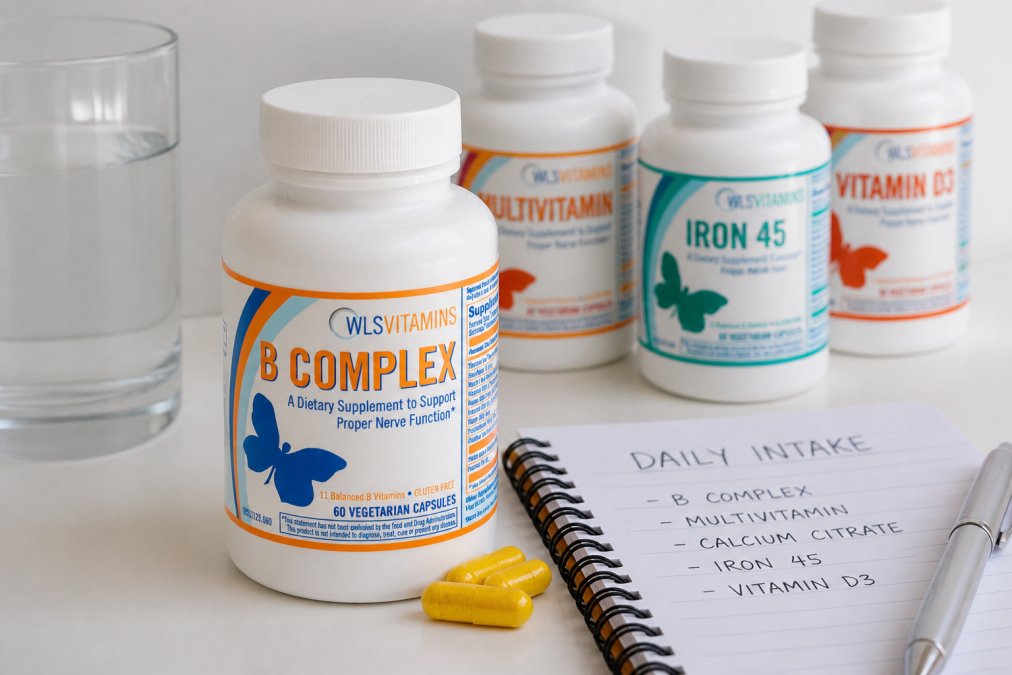
1. Bariatric B Complex with Thiamine for GLP-1 Support
B vitamins are the metabolic engine, they convert food into usable energy at the cellular level. Without adequate B vitamins, your mitochondria literally can't produce ATP, the energy currency of your cells.
The Bariatric B Complex with Thiamine delivers high-potency B vitamins specifically formulated for rapid weight loss. Thiamine is dosed aggressively because bariatric patients need aggressive repletion. This formula includes all eight B vitamins plus supporting nutrients like choline and inositol that enhance energy metabolism.
What makes this different from standard B-complex supplements is the dosage. Generic B-complex supplements provide maintenance doses designed for people with normal digestion. Bariatric patients absorb roughly 50-60% of what they consume, so standard doses leave you deficient (peer-reviewed research). This formula accounts for malabsorption by providing therapeutic doses.
Best for: Patients needing comprehensive B vitamin support without a separate B12 supplement. Works well for people with stable digestion who can tolerate capsules.
2. Chewable B12 for Bariatric & GLP-1 Patients
B12 deficiency is the most common nutritional complication after bariatric surgery (the NIH). Your stomach produces intrinsic factor, a protein required to absorb B12 from food (peer-reviewed research). After gastric bypass or sleeve surgery, intrinsic factor production drops dramatically. You can eat B12-rich foods and still become deficient because your body can't absorb it.
This chewable B12 delivers 1000 mcg of methylcobalamin, the active form your body uses immediately. It includes folic acid for synergistic energy support. The chewable format dissolves in your mouth, bypassing your compromised stomach entirely and entering your bloodstream through oral mucosa absorption.
Standard B12 supplements require stomach acid and intrinsic factor for absorption, exactly what you don't have post-surgery. Chewable or sublingual B12 supplements bypass these requirements entirely.
Best for: Patients with confirmed B12 deficiency, mental fatigue, or neurological symptoms. Essential if you've had gastric bypass. Ideal for people who struggle swallowing pills.
3. Bariatric Daily Multivitamin (Dr. V's Daily Multi)
This comprehensive formula covers all critical micronutrient needs. It includes therapeutic doses of B vitamins, fat-soluble vitamins (A, D, E, K), minerals like iron, zinc, and magnesium, plus supporting nutrients like choline and inositol.
The formulation is deliberately high in thiamine because energy metabolism depends on it. Thiamine deficiency causes fatigue, brain fog, and neurological complications. This multivitamin provides aggressive repletion levels because bariatric patients need them.
The capsule format is designed for maximum absorption in your post-operative stomach. The suggested use is 3 capsules daily, divided throughout the day (one every 8 hours) to maximize absorption. This formula includes everything you need if you're not supplementing separately. However, if you have confirmed iron or B12 deficiency, you'll likely need higher doses of those specific nutrients than this multivitamin provides.
Best for: Patients wanting one comprehensive formula covering all micronutrient bases. Works well for people with stable digestion and no severe specific deficiencies.
4. Bariatric Iron Bis-Glycinate with Vitamin C & B12
Iron deficiency after bariatric surgery is common, especially in menstruating women. Standard iron supplements cause nausea and constipation in post-operative patients. Worse, your compromised digestion often doesn't absorb them well.
This formula uses iron bis-glycinate, iron bound to glycine, an amino acid. This binding allows your intestines to absorb iron without the digestive distress of standard iron salts. It's one of the few iron forms that bariatric patients can actually tolerate and absorb.
The formula includes vitamin C to enhance iron absorption, plus thiamine, riboflavin, folic acid, and B12 for energy support. It's specifically designed for the iron-energy connection: iron carries oxygen to your cells, enabling energy production. Without adequate iron, no amount of B vitamins will fix your fatigue.
Best for: Patients with confirmed iron deficiency or physical fatigue symptoms. Essential for menstruating women post-bariatric surgery. Ideal if you've had poor tolerance to standard iron supplements.
| Product | Format | Key Nutrient | Best For |
|---|---|---|---|
| B Complex with Thiamine | Capsule | All B vitamins | Comprehensive B support |
| Chewable B12 | Chewable tablet | Methylcobalamin | B12 deficiency, mental fatigue |
| Daily Multivitamin | Capsule | Complete micronutrient blend | All-in-one coverage |
| Iron Bis-Glycinate | Tablet | Iron + supporting nutrients | Iron deficiency, physical fatigue |
Which Bariatric Vitamin Formula Should You Choose?
Your choice depends on three factors: your specific deficiency pattern, your stomach tolerance, and your lifestyle.
If you have confirmed B12 deficiency: Start with the Chewable B12. Methylcobalamin works faster than cyanocobalamin, and the chewable format ensures absorption.
If you're experiencing comprehensive fatigue without a confirmed specific deficiency: The Bariatric Daily Multivitamin covers all bases. It's higher potency than generic multivitamins and formulated specifically for post-operative absorption. Take it divided throughout the day rather than all at once.
If you have confirmed iron deficiency or physical exhaustion symptoms: The Iron Bis-Glycinate is essential. Standard iron supplements won't work for your compromised digestion. This form actually absorbs.
If you want to build a targeted stack: Combine the B Complex with targeted supplements based on blood work. Many patients do best with B Complex plus separate B12 plus Iron, rather than one comprehensive formula.

The most common mistake: starting with a comprehensive multivitamin when you actually have severe B12 or iron deficiency. The multivitamin provides maintenance doses, not therapeutic doses. If your blood work shows deficiency, you need targeted high-potency supplementation.
Start with blood work. Let your deficiency pattern guide your choice. Reassess with follow-up blood work in 8-12 weeks. Your needs will evolve as your body stabilizes post-surgery.
Energy crashes after bariatric surgery aren't inevitable, they're a sign your body needs clinician-formulated support. Generic supplements miss the mark because they're designed for intact digestive systems. WLSVitamins formulas address the specific malabsorption challenges bariatric patients face, with therapeutic doses of methylated vitamins and bioavailable mineral forms your body can actually use. Start with blood work to identify your specific deficiencies, choose the right bariatric vitamin formula, and reassess in 8-12 weeks. Your rapid weight loss journey doesn't have to mean months of fatigue and brain fog, the right supplementation changes everything.
Frequently Asked Questions
Q: Why do I feel so tired after bariatric surgery?
A: Post-surgery fatigue stems from reduced calorie and nutrient intake, which limits the raw materials your body needs for energy production. Bariatric surgery reduces your stomach's capacity, making it harder to absorb critical nutrients like B12, iron, and folate, all essential for energy metabolism. Additionally, rapid weight loss accelerates metabolic changes. Without targeted bariatric multivitamin supplementation, your cells cannot generate ATP (energy) efficiently, leaving you exhausted even when you're eating enough food.
Q: What is the role of B12 in bariatric energy levels?
A: Vitamin B12 is fundamental to energy production and red blood cell formation. After gastric bypass or gastric sleeve surgery, your stomach produces less intrinsic factor, the protein needed to absorb B12 from food. This leads to deficiency, which causes fatigue, brain fog, and weakness. Methylated B12 (methylcobalamin) is already metabolically active, unlike standard cyanocobalamin, so it bypasses the absorption problem. A chewable B12 supplement like our formulation delivers 1000 mcg in a form your body can use immediately, restoring energy without relying on stomach acid or intrinsic factor.
Q: Are generic multivitamins enough for bariatric patients?
A: Generic multivitamins fall short for bariatric patients because they're formulated for people with normal digestion. Bariatric patients need higher potencies of specific nutrients, especially thiamine (B1), which many generic brands underdose. Standard formulas also use forms of nutrients your altered digestive system cannot absorb well. Clinician-formulated bariatric multivitamins account for your reduced absorption capacity and include bioavailable forms like methylcobalamin and ferrous glycinate. They're also designed to be gentle on sensitive post-op stomachs, preventing nausea and digestive upset that generic options often trigger.
Q: How long does fatigue last after bariatric surgery?
A: Fatigue typically peaks in the first 2-4 weeks after surgery and gradually improves over 2-3 months as your body adjusts. However, if you don't address nutritional deficiencies, fatigue can persist for years. Many patients experience a second wave of exhaustion 6-12 months post-op when stored nutrient reserves deplete. Consistent supplementation with bariatric-specific vitamins, especially B12, iron, and a high-potency multivitamin, shortens recovery time and prevents long-term fatigue. Most patients report significant energy improvement once they're on a proper supplement regimen.
Q: What vitamin deficiency causes extreme fatigue after gastric bypass?
A: B12 deficiency is the most common culprit behind severe post-bypass fatigue, affecting up to 30% of bariatric patients. Iron deficiency ranks second, particularly in menstruating women, causing weakness and shortness of breath alongside fatigue. Folate and thiamine deficiencies also contribute to energy crashes. These three nutrients are central to energy metabolism and red blood cell production. Signs include persistent tiredness despite adequate sleep, brain fog, and shortness of breath with minimal exertion. A bariatric multivitamin with high-potency B12, iron bis-glycinate, and folic acid addresses all three deficiencies simultaneously.
This article was written using GrandRanker